Article
What does Maeve mean ?
Maeve is the modern form of Medb, the Old Irish name of the legendary
Queen of Connacht, and the name is tied to the Celtic word for mead. Medb is usually translated “she
who intoxicates” or “the intoxicating one”.
This guide explains the Medb meaning, who the queen was, why scholars call her a goddess of
sovereignty, and why one of our Mayo hives is named after her.
What does the name Maeve mean?
The short answer is “intoxicating”, with mead at the root of the word. The Medb meaning and the
Meabh meaning are the same thing in different spellings. Old Irish Medb became Meadhbh, then
modern Méabh (often written Meabh without the accent). The English forms include Maeve, Maev and
Mave, as listed in Wikipedia’s article on Medb. Maeve and Méabh are both said roughly “mayv”.
Where does the name Medb come from?
Linguists reconstruct a Proto-Indo-European root, médhu, meaning “mead, honey”. It lies behind Old
Irish mid, Old English medu, Sanskrit mádhu and Lithuanian medùs, according to the Indo-European
Lexicon at the University of Texas.
Medb is generally believed to come from the Celtic form of this word. Britta Irslinger (2013) links it to
Celtic medu-, “mead”, and to an adjective meaning “strong, intoxicating”, as quoted by Voices from the
Dawn. A minority view derives it from a word meaning “ruler”. Both readings suit a queen of
sovereignty, but the mead link is the most widely accepted.
Who was Queen Medb of Connacht?
In the Ulster Cycle of Irish saga, Medb rules Connacht from Cruachan, now Rathcroghan in County
Roscommon, with her husband Ailill mac Máta. The Táin Bó Cúailnge, the Cattle Raid of Cooley, begins
with a bedtime argument over who is richer. Ailill owns the great bull Finnbennach, so Medb sets out to
take the Brown Bull of Cúailnge. The raid becomes a war against Ulster, with the hero Cúchulainn
holding her army at the fords.
Heritage Ireland’s piece on Medb of Connaught notes that some read the tale as a petty quarrel, while
Sylvia Brinton Perera reads Medb as defending her independence against a rising patriarchal aristocracy.
Legend gives her a dramatic death. Her son Furbaide kills her with a piece of cheese from a sling while
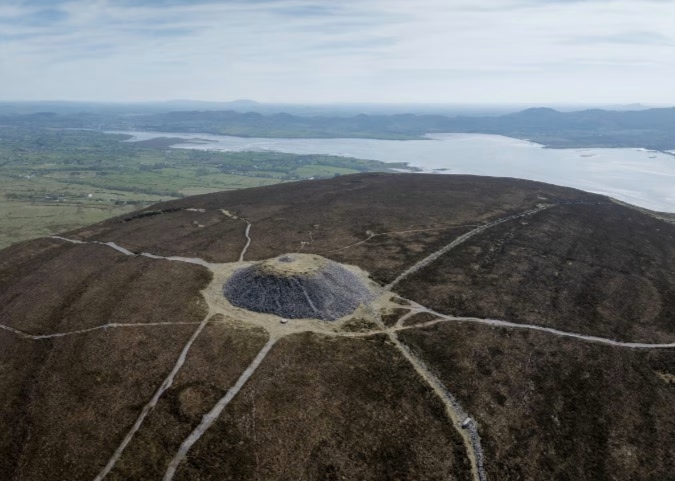
she bathes on Lough Ree. Tradition places her burial in the cairn on Knocknarea in County Sligo, Miosgán
Médhbh, though Rathcroghan is also proposed. These are medieval stories, not biography.
Was Medb a goddess of sovereignty, and what is the mead cup?
Many scholars read Medb as the personification of sovereignty, the land a rightful king was symbolically
married to. Tomás Ó Máille suggested in 1928 that she is an allegory for the sovereignty of Connacht, as
Wikipedia summarises. A second figure, Medb Lethderg, is a sovereignty goddess at Tara, wife or lover
of nine successive kings. The henge Rath Meave is named after her, and scholars are unsure whether the
two Medbs are one figure.
The recurring image is a goddess who serves the drink and is herself the drink. Heritage Ireland, citing
Perera, says the chosen king was made drunk to gain the knowledge needed to rule. This is a literary and
scholarly tradition reconstructed from medieval texts, not a documented ceremony, so “no king could
rule without mead from her hands” is best told as “in the stories”.
Tara’s great hall was called Tech Midchúarta, the House of the Mead-Circuit. Archaeologist Conor
Newman’s 2007 study, Procession and symbolism at Tara, reads the surviving earthwork as a ceremonial
processional approach, not a literal banqueting hall.
Why did honey matter in early Ireland?
Early Ireland produced Europe’s earliest known standalone bee-law tract, the Bechbretha, from around
the seventh century AD. Edited by Thomas Charles-Edwards and Fergus Kelly (1983), it covers swarm
ownership, stings and a “neighbour’s share” of honey. Other legal codes, such as the Hittite laws and the
Salic law of the Franks, mention bees only as a clause within a larger code. Myth adds the smith-god
Goibniu, who brews a drink that keeps the gods from age in Fled Goibnenn.
Is Maeve the same name as Mab?
Probably not. Queen Mab is the fairy queen in Mercutio’s speech in Romeo and Juliet. A popular theory
links her to Medb, but the Queen Mab article records that the scholar Gillian Edwards sees little
resemblance, and it calls the name Mabel a more likely origin. Treat the link as unproven.
Why is one of our Mayo hives called Maeve?
Mayo lies in the old kingdom of Connacht, the realm Medb ruled in legend.
“We deliberately named one of our Mayo hives after Queen Maeve because of her
unique historical connection with honey and mead in Ireland.”
— Dr. Sean O’Connor, founder of Irish Mead and the Inishturk Native Irish Honey Bee
Sanctuary
We founded the Inishturk Native Irish Honey Bee Sanctuary to conserve the native Irish honey bee, Apis
mellifera mellifera, on Inishturk Island, County Mayo. Honey from our hives is where Wild Atlantic Mead
begins. You can taste the story at IrishMead.ie.
Frequently asked questions about the name Maeve
-What does Maeve mean? Maeve comes from the Old Irish Medb, usually translated “she who
intoxicates”. The name is linked to the Celtic word for mead.
-Is Maeve really related to mead? Most scholars say yes. Medb is generally thought to come from Proto-
Celtic medu-, “mead”, or an adjective meaning “intoxicating”. A minority view proposes “ruler”.
-Who was Queen Maeve? She is the queen of Connacht in the Ulster Cycle of Irish saga, ruling from
Cruachan (Rathcroghan, County Roscommon). She is a legendary figure, not a documented ruler.
-Where is Queen Maeve buried? Legend places her in the cairn on Knocknarea in County Sligo, Miosgán
Médhbh. Rathcroghan is also proposed.
-Did kings drink mead from Medb’s hands? Not as a documented ceremony. In the stories and in
scholarship, the sovereignty goddess serves the drink that confirms the king.
Sovereignty, ancient power and honey wine in one name
-Maeve carries a queen, a claim to rule and a drink in one name.
If someone you know is called Maeve,
Méabh or Meadhbh, tell them the story, and explore Wild Atlantic Mead at IrishMead.ie.
Sources
- Medb, Wikipedia: etymology, Táin, sovereignty scholarship, death story
- Medb Lethderg and Rath Meave, Wikipedia
- Medb of Connaught, Heritage Ireland
- Indo-European Lexicon, University of Texas
- Voices from the Dawn, Tara citations: Irslinger (2013), Ulidia 4
- Conor Newman (2007), Procession and symbolism at Tara, Oxford Journal of Archaeology 26(4)
- Queen Mab, Wikipedia
- Charles-Edwards and Kelly, Bechbretha (Dublin Institute for Advanced Studies, 1983), from your
research notes, not re-opened here
Read More
Wild Atlantic Mead Named Best New Mead at Inaugural Global Drinks Awards
Artisanal 8% ABV Irish honey mead claims New Product of the Year – Mead in Londo…
Read More about Wild Atlantic Mead Named Best New Mead at Inaugural Global Drinks AwardsWeekly Mead Recipes
November 16, 2026 — irishmead.ie has today announced the launch of a new weekly…
Read More about Weekly Mead RecipesDublin Nollaig Mead
Discover how to craft Sean's much-loved Dublin Nollaig Mead, a classic Irish Chr…
Read More about Dublin Nollaig Mead